
The term blacklist refers to a list of IP addresses or email domains that are, generally speaking, flagged as a source of spam or as potentially harmful to third parties.
What is an email blacklist?
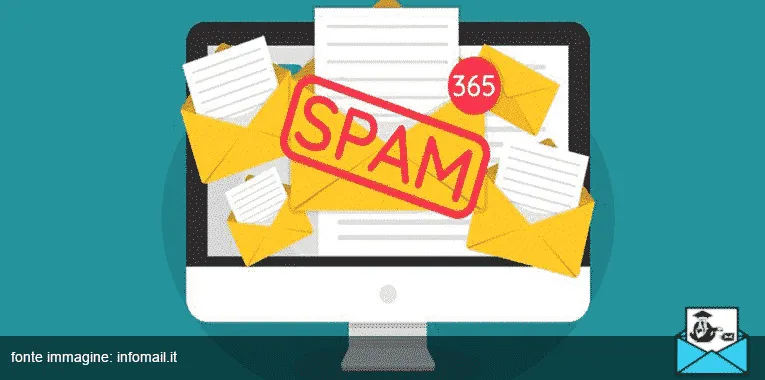
What does it mean to have a contact on a blacklist?
In practice, it means that email address will no longer receive any messages.
Even though it still appears in your contact list, it will be excluded from your sending list.
There can be many reasons for this.
Most of the time, it happens because the account does not exist or has been inactive for a long time.
But be careful. What happens when it is your outgoing email that gets classified as spam? In other words, when you are the one who ends up on a blacklist?
Let’s find out in the next section.
What causes it
Unfortunately, some email marketing campaigns are at risk of failing.
Why?
Because of blacklists, of course.
Put simply, the emails you send never reach their destination. They are not delivered, but discarded as unwanted messages, or even treated as harmful.
It is all too easy to get caught in an email blacklist, and there are essentially two reasons why:
- the recipient reports your message, or
- the email client decides to block the message upstream.
Remember, though, that you can check your domain’s status yourself.
Want to know if you are on a blacklist? Just use free tools such as MxToolbox.
How to avoid getting blacklisted
Every email marketer’s nightmare is landing on one of the infamous blacklists.
But don’t worry too much.
There are a number of best practices you can put in place to steer clear of the problem.
Here are some of the most important:
- keep your computer’s antivirus up to date to prevent malware from being installed,
- use professional software built for email marketing,
- don’t overdo your sending frequency: repeated bulk sends damage your credibility,
- make it easy to subscribe and unsubscribe,
- always focus on content quality.
Finally, remember to check your contact database regularly.