
CAPTCHA is an acronym for “Completely Automated Public Turing test to tell Computers and Humans Apart“. It refers to those alphanumeric strings, often in odd or distorted characters, that you’re asked to recognize and type back.
But what is it for?
What is a CAPTCHA?
A CAPTCHA checks that you are a real person and not a bot, meaning a piece of software designed to steal user information or carry out spam activity.
A CAPTCHA is often placed before you complete an action that involves entering sensitive data on a website, such as signing up for a newsletter or making a payment on an e-commerce site.
Origin of the name
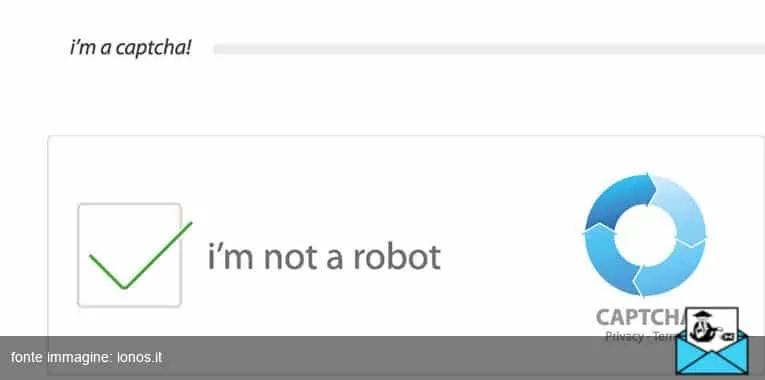
As mentioned, the name CAPTCHA is an acronym, but it also sounds like the English expression “caught you!“.
The term was coined in 2000 by computer scientists at Carnegie Mellon University. The first use of a CAPTCHA, however, dates back to 1997 on the AltaVista search engine.
Different types of CAPTCHA
The classic version asks you to retype distorted alphanumeric characters. Only a human can interpret them correctly, because bots struggle to read distorted text.
That’s not the only way to tell humans and computers apart, though. Visual tests (click on all the squares that contain a certain object) are also very common.
More recently, since the average user finds them quite annoying, less and less intrusive CAPTCHAs have been introduced.
Just think of the “I’m not a robot” checkbox. And little by little, increasingly smart algorithms will be able to tell a human from a computer based on behavior alone.
Why use CAPTCHAs?
Many websites need CAPTCHAs to make sure bots can’t access their services, because bots could launch spam campaigns, steal passwords or data, or attempt hacking.
For example, an online store’s website has to protect its customers’ sensitive data and payment systems.
A blog or a forum, on the other hand, benefits from blocking spam so that conversations and shared content stay organic and valuable. In fact, CAPTCHAs are also used to detect spam activity on some social networks.
Accessibility issues
The widespread use of CAPTCHAs since the early 2000s has created problems for users with disabilities. For example, people with visual impairments may be denied access.
Google introduced audio CAPTCHAs to get around this obstacle.
How reCAPTCHA is used
CAPTCHA tests can also serve purposes other than telling humans and artificial intelligence apart.
reCAPTCHA is the name for tests that help some libraries digitize old texts. The OCR programs normally used for this work have trouble recognizing certain kinds of writing.