
CPC stands for Cost per Click. It is a KPI: a core digital marketing metric that tells you the cost of a single click on a given ad.
It is used to assess the effectiveness of online advertising campaigns, above all Pay per Click (PPC) campaigns.
How to calculate CPC
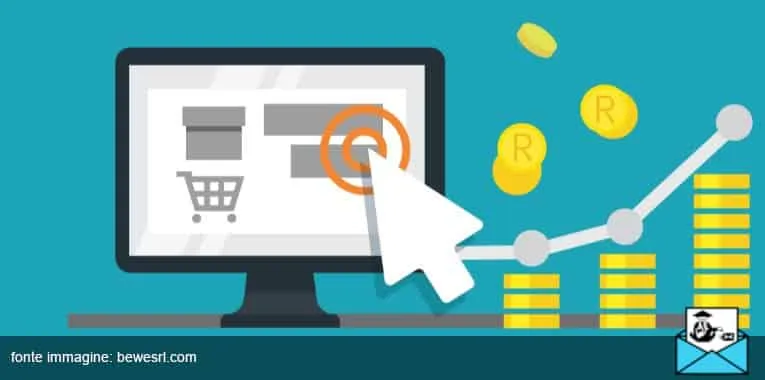
Cost per Click is the ratio between two figures: how much you spent on an advertising campaign and the number of clicks it generated.
To calculate it, simply apply the following formula:
Average CPC = Advertising campaign cost / total number of clicks
Let’s look at a practical example. Suppose your ad received two clicks, one costing €0.20 and the other €0.60, for a total spend of €0.80.
Your Cost per Click is €0.40. Why?
We simply divided €0.80 by 2 (the number of clicks received).
How it works in Google Ads
Many factors can affect CPC. First and foremost, the advertising platform you choose to run your campaign.
Let’s take a closer look using Google Ads, one of the tools marketers around the world love most.
Google Ads Cost per Click depends on three elements:
- Ad Rank, i.e. the ad’s position on the search results page;
- the maximum bid, essentially the highest price you are willing to pay for each click;
- Quality Score, a quality rating developed by Google. It runs on a scale from 1 to 10 and rates the ad based on factors such as expected click-through rate (CTR) and keyword relevance. Of course, Cost per Click also depends on the type of business involved and the products or services it offers.
The advantages
In practice, CPC is a sound way to plan and buy online advertising, for one very clear reason: the advertiser pays only when a user actually clicks the ad.
CPC is also key to improving your ROI (Return on Investment).
You set a budget, track spending and returns, and then optimize the advertising campaign.
It really could not be simpler.